







Resources on Followership
Articles
- The Doctrine of Completed Staff Work, US Army
Describes the standard of work for which staff members.
- Courage in the Corridors, by Ray Blunt
On creating a climate conducive to candor.
- Followership, by Kevin Slater (USAF, Ret.)
Excerpt from the book Old School is Good School
- Dynamic
Followership: The Prerequisite for Effective Leadership, by Lt. Col. Sharon LaTour and Lt. Col. Vicki Rast (USAF)
How teaching subordinates to become dynamic followers supports their development as leaders.
- Courageous Followers, Courageous Leaders, by Ira Chaleff
Provides a nice summary of the ideas in Chaleff's classic book, The Courageous Follower: Standing Up To & For Our Leaders
- Telling Truth to Power, by Bob Stone
Inspiring story from Governing Magazine.
- The Ten Rules of Good Followership, by Col. Phillip Meilinger, USAF
- It Doesn't Take a Wizard to Build a Better Boss, by Len Schlesinger
Having a bad boss can be a great opportunity. From FastCompany magazine
Books
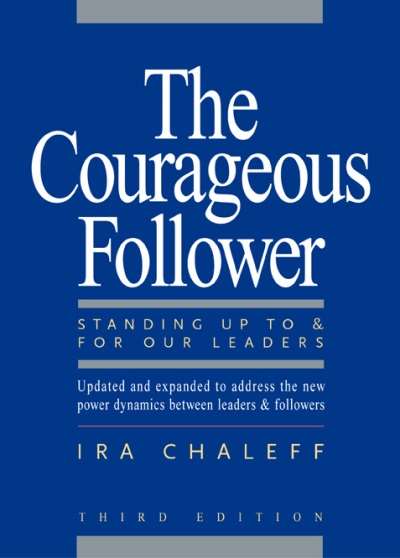
The Courageous Follower: Standing Up To & For Our leaders
In this book, which is one of the seminal works on followership, Ira Chaleff explores a wide range of leader-follower dynamics and asserts that followers must take significant responsibility for the quality of the leadership exercised by their superiors. Chaleff argues that followers must start by being competent and loyal so they can establish the credibility needed so the boss will sit up and take note when the follower finds it necessary to speak truth to power. Chaleff also discusses the circumstances under which followers should withdraw support, take a moral stand, or even leave the organization. Just as important, he addresses how leaders can cultivate the "courage to listen" and cultivate a climate of openness. The newly-released Third Edition includes a chapter on "The Courage to Speak to the Hierarchy," which discusses how the handle communications when speaking to executives several levels higher in a large organization. This book has much food for thought for those who are willing to take ownership of their work climate and try to make it better. Read More...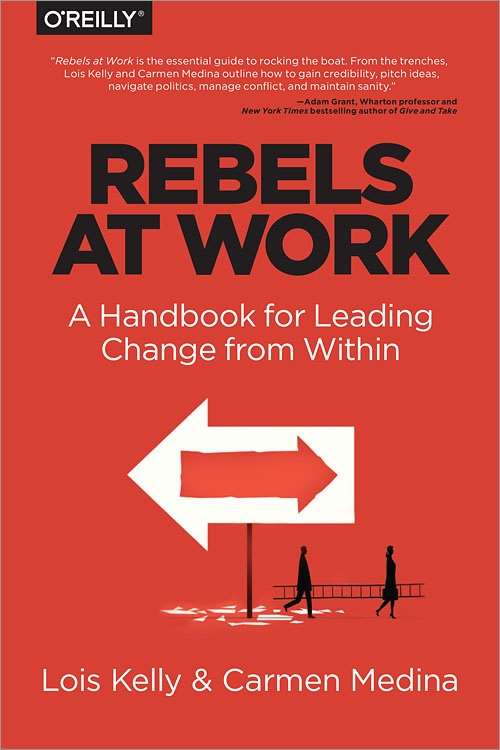 Rebels at Work: A Handbook for Leading Change from Within
Rebels at Work is the perfect handbook for change agents in government. The authors focus on helping "good" rebels, i.e. those who take positive, creative approaches to making their organization better and stronger (as opposed to "bad" rebels, who complain and break rules). The book is loaded with great tips to help rebels learn to sell their ideas, understand the perspectives of their bosses and peers, and find allies. Includes a terrifics chapter with tips on how to manage rebels effectively (for the benefit of the organization, of course). If you have a lot of ideas for making your agency better, this book is absolutely indispensable. Read More About the Book... Also check out the authors' excellent Rebels at Work blog.
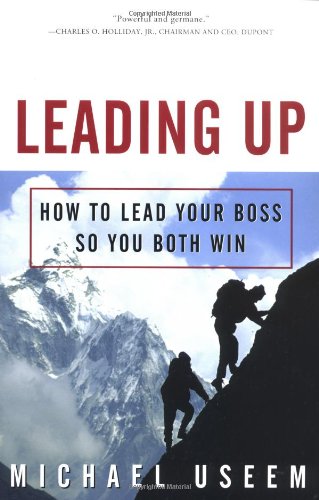
Leading Up: How to Lead Your Boss So You Both Win
Michael Useem pulls together a number of compelling stories of leaders who needed to lead up effectively when the stakes were high. Some did it well, (e.g. Gen. Peter Pace and former US Trade Representative Charlene Barshefsky), while others were less than successful (e.g. Gen. George McClellan in the US Civil War and UN Commander Roméo Dallaire in Rwanda). This book can serve as a wake-up call for government managers, as public sector organizations often have hierarchical and risk-averse cultures that can make employees reluctant to lead up. Read More...
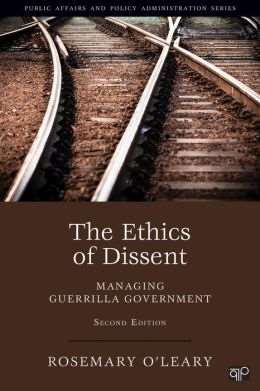
The Ethics of Dissent: Managing Guerrilla Government
There are times when public employees disagree with the policies of their agency. Ideally, when this happens employees will find effective ways to express their dissent and management will listen to their concerns carefully (even if the policy does not change). But in some cases public employees conclude there is nothing they can do; in other cases they quit; and in rare cases public employees go so far as to pursue an agenda that is contrary to the official policies of their agency. Rosemary O'Leary's brilliant book The Ethics of Dissent highlights the "guerrilla" activities of this last group, including case studies from the Forest Service, the EPA, the Department of Interior, and NASA. Hopefully, none of us will ever be in the position of having to make the choices faced by the public servants profiled by O'Leary. One of the key lessons of the stories is that it is vitally important for public managers to create an open environment based on trust and mutual respect where dissenting views can be heard and concerns addressed. This is not a manual for government "guerrillas," but rather a series of cautionary tales about managers who were not open to listening to their people. Read More...Videos
Ira Chaleff: Leaders, Followers, Self-Interest, and Risk
Ira Chaleff: How can followers give upward feedback?