
Courage in the Corridors
Before Mel Gibson caught the attention of the movie-going public in telling the Easter story, he directed another historic story, that of the Scottish patriot William Wallace. Wallace is revered in legend as a hero, fighting for the right against all the odds. His courage in so doing is embodied in the movie’s title—Braveheart—denoting a man of surpassing courage. He had a brave heart.Diagnosing Fear
While public service leaders may use pens instead of swords, they are not without the need for courage also. When faced with how to describe those they would follow to another job if asked, most of the aspiring leaders I have worked with over the years have cited courage as clearly in their Top 10. They see few, if any, organizations where fear is not lurking about.Some of the symptoms of fear in an organization include a widespread reluctance to:
- speak of the “unmentionables,” (and every organization knows what they
are—just ask privately);
- make decisions that are known to be politically charged, (small p or capital
P);
- speak the truth to power (the parable of the emperor’s clothes is not simply a
fairy tale); and
- speak the truth about performance shortcomings to subordinates.
Followers say they want leaders who will make the tough decisions and not study them to death. They want leaders of principle who will take risks to stand for what is right and to be a blocking back for those with less power or rank. They want a climate where speaking the unmentionable truth is not viewed as an aberration but as a matter to be encouraged. And they want leaders who would appreciate such honesty, even about themselves.
Speaking the Truth to Power
In a memorable scene in the Oscar-winning movie, A Man for All Seasons, Thomas More, the senior civilian leader in England, is visited by King Henry VIII. Henry is on a mission to persuade his Chancellor to back the annulment of his marriage in order to marry again to have an heir. Despite appeals by the King to both friendship and fear, Thomas More cannot do so. We struggle with him as his loyalty and trepidation war with his conscience. He plaintively asks why with everyone else supporting the decision, Henry needs his approval. The telling reply, “Thomas, you are an honest man, and more importantly, everyone knows you are an honest man.”So how then do leaders learn when to speak the truth to power and to be courageous in the face of potential bureaucratic retribution? How do they drive fear out of their organization?
Learning Courage
The one sector of government that does explicitly value courage is the one in which life or death situations are part of the job description. The military and the law enforcement components of government both place a premium on courage—certainly in times of operational stress and intensity of war. They train people in “near combat” situations to instill courage in leaders and followers alike.Yet even civilian agencies view key decisions and new policy initiatives as “combat,” apt to draw retaliation for the wrong position or for crossing a politically favored leader. Even senior leaders quail at the thought of (appropriately) firing a recalcitrant performer for fear of an accusation of discrimination or abuse that may stick forever. What to do?
Prepare leaders to act with courage in the face of opposition and train followers to speak the truth to power. Make it a part of the fabric of the organization. But this is easier said than done.
Here are some tips from people of courage:
- Speak openly and honestly about the climate of fear.
It is amazing how simply naming the beast defangs it. If what people now
whisper becomes a matter for normal conversation, it somehow loses its
power.
- Encourage employees to speak the truth to power.
One practice that I learned the hard way was to ask people to tell me
what I was doing wrong—I could not change what I was doing without their
honesty. I can well remember being informed that I sometimes came across as
arrogant. That hurt, but it was on target, and I’ve never forgotten that
gift of courage and honesty.
- Model what is desired. Senior leaders need to
run interference for their employees and not use them as scapegoats when
things go wrong. It is all too easy to blame a lower level employee for a
mistake than to own up and say that what happens in my organization stops
with me.
- Put it on your mentoring agenda. Offer protégés a way to discuss and anticipate “combat” and the challenges that come with power. Be honest and transparent about your own struggles with fear.
The truth is, few matters of conscience or belief are career ending (as we often fear). Teaching and modeling courage are best accomplished by putting rising leaders in positions where courage is encouraged (built into the heart) thereby giving them the confidence to speak the truth to power, and survive to tell the tale. Prepare them now for the tougher choices they will encounter in the future, when political winds blow strong and the career consequences seem higher.
Alexander Solzhenitsyn once faced down the former Soviet Union, almost as a lone voice. His words still ring true today: “One word of truth outweighs the whole world.” Speak the truth to power and help those behind you to do so as well.
So, what do you think? Are there “unmentionables” in your organization that could be more openly discussed? Do you have any good stories of where a leader or a follower spoke the truth to power? Do you have some thoughts on how we can do a better job of driving fear out of an organization? Or, about developing and encouraging rising leaders to embody courage?
©2005 GovLeaders.org
Related Articles
- Courageous Followers, Courageous Leaders
- Dynamic Followership: The Prerequisite for Effecitve Leadership
Related Books
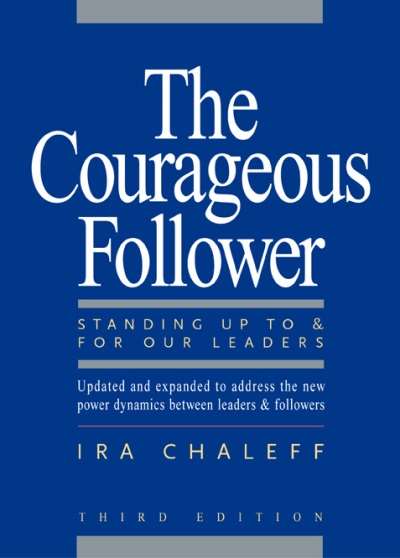
The Courageous Follower: Standing Up To & For Our Leaders
In this book, which is one of the seminal works on followership, Ira Chaleff
explores a wide range of leader-follower dynamics and asserts that followers
must take significant responsibility for the quality of the leadership exercised
by their superiors. Chaleff argues that followers must start by being
competent and loyal so they can establish the credibility needed so the boss will sit up and take note when the follower
finds it necessary to speak truth to power. Chaleff also discusses the
circumstances under which followers should withdraw support, take a moral stand,
or even leave the organization. Just as important, he addresses how
leaders can cultivate the "courage to listen" and cultivate a climate of
openness. The newly-released Third Edition includes a chapter on "The
Courage to Speak to the Hierarchy," which discusses how the handle
communications when speaking to executives several levels higher in a large
organization. This book has much food for thought for those who are
willing to take ownership of their work climate and try to make it better.
Read More...

Transparency: Creating a Culture of Candor
Candor is like oxygen for an organization. This superb book has essays by Warren Bennis, Daniel Goleman and James O'Toole that describe the importance of candor, how leaders can create a climate that fosters candor, and tips on how to speak truth to power. Includes numerous inspiring examples of how to do these things well. Also provides some excellent cautionary examples of leaders who squelched candor in their organizations.
Read More...
Read More...