
Action Plan to Achieve Breakthrough Improvement in Employee Productivity and Leadership Effectiveness
Plan:
- Role Model Development. Senior leaders set the tone in enabling a culture of development. They are good role models for developing employees, they believe that development is important, and they make development a priority. The best leaders see learning not as an expense, but an investment that returns dividends of a workforce more committed to the organization and more willing to expend their discretionary effort to get the job done. When you stop learning, you stop leading!
- Clearly Communicate Expectations. Leaders strategically use communication to produce enthusiasm and foster an atmosphere of open exchange and support. They are adept at energizing people to see pathways that get to goals despite challenging conditions. Leaders establish clear performance expectations and hold people accountable to deliver on their work promises to their team, boss, and stakeholders.
- Ensure Work Provides Learning. The vast majority of employees seek to learn and grow while performing day-to-day work and crave a learning environment in that context. Many managers lament that time constraints or competing priorities limit the time they devote to employee development. The good news is that great leaders incorporate learning as an essential part of their normal job responsibilities and “blur the line” between learning and work. They create learning environments so that, on each work assignment, they can help employees creatively anticipate and find solutions to specific challenges.
Execute:
- Encourage Development. Great leaders know that their most important job is to develop their successors and maintain a legacy of leadership. The leaders who are most effective at developing their successors have employees who are more likely to stay, more satisfied with their job, more committed to the organization, and more productive. Choose those you believe have the values you wish to promulgate and the talent to learn the leadership behaviors you believe are important to the future of your organization and then give them personal developmental attention. Yes, it takes time. However, remember your leadership mission: legacy.
- Help Apply New Skills/Knowledge. Great leaders provide one-on-one coaching and mentoring opportunities to apply new technical skills or knowledge on regular work or new projects and relate these “teachable moments” back to the overall organizational vision or strategy. The appreciative support of helping others grow contributes to a distributed sense of leadership at all levels. Transformational leaders believe in distributed leadership and are often seen mentoring, coaching, and ensuring the development of others.
- Relate Interpersonally. Leaders set a vibrant high performance organizational culture through effective interpersonal relations, indicated by real dialogue, lots of input, and transparency. Dialogue implies deeper conversations rather than information handoffs. Dialogue involves demonstrating a true concern for the perspective of others and committing to listening rather than trying to convince. Appreciative exploration gives dialogue its power; people see you care and are willing to invest in hearing them out. When people see that you are committed to them, they will commit to you.
- Pass Along Job and Development Opportunities. The best leaders use their own experience to give employees advice about emerging trends, political relationships, career development, and yes…job openings and development opportunities. You may grow some folks who will take their capabilities elsewhere based on your recommendations…and you’ve built life-long loyalty not only from them, but also from the rest of your team…they recognize your commitment.
Evaluate:
- Become Knowledgeable About Employee Performance. Leaders are knowledgeable about their employees’ performance, which builds considerable trust and respect. Most would say that this is a “no-brainer,” yet only 30-40 percent of employees report that their managers communicate performance standards and provide fair and accurate feedback to help them do their jobs better.
- Provide Voluntary, Detailed, Immediate, and Positive Feedback. Most employees believe that formal performance reviews do not help on-the-job performance, yet they crave feedback, especially on strengths. Most managers view formal performance reviews as an administrative requirement rather than as a powerful lever to positively influence employee performance. Only 35 percent of employees rate their manager above average in providing feedback and report that they only provide general, non-specific praise. Great leaders catch their people doing something right and point it out to them in a detailed and timely fashion.
- Recognize/Emphasize/Leverage Strengths. Positive leaders are well known for recognizing, emphasizing, and leveraging strengths and what is working rather than the opposite approach of focusing on weaknesses and what isn’t working. Focusing on success creates positive energy by recognizing and appreciating what is working, which produces greater engagement and momentum for change. That doesn’t mean that you never discuss performance gaps…when you do, focus on specific suggestions for improvement or development related directly to job performance. The number one reason why people thrive in an organization is their immediate manager; unfortunately, it’s also the number one reason they quit.
Bottom Line:
- Establish a performance management based organizational culture, although not from a command and control perspective, but one that involves a coaching environment and conscious attempts at continuous dialogue within work teams to achieve breakthrough improvements in manager-employee relationships and on-the-job results.
Posted by GovLeaders.org with the author's kind permission.
Related Articles
- What's a Manager to Do?
By Jim Trinka - Building a Highly Engaged Workforce
Gallup Management Journal - Is Your Company Bleeding Talent?
Gallup Management Journal
Books by Jim Trinka
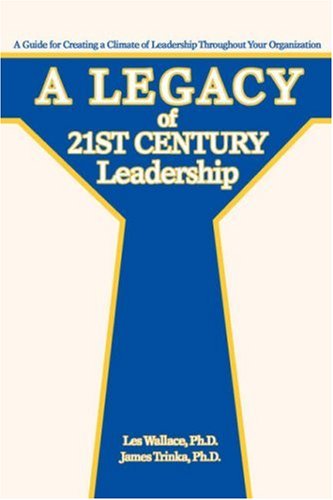
A Legacy of 21st Century Leadership
A Legacy of 21st Century Leadership synthesizes
some of the most compelling research on how leaders learn to lead and provides a roadmap for cultivating a climate of leadership in your agency or organization. Jim Trinka and Les Wallace argue that leaders need to make a deliberate decision to lead, learn constantly, model effective leadership for the next generation, and focus on developing others. They also advocate for developing leaders at all levels across the organization (rather than focusing on a “favored few”) and using varied and challenging assignments as a key leadership development tool. Trinka has served as Chief Learning Officer at the FBI and Director of Technical Training and Development for the FAA.
Read More...