






Education for Leadership
The following article was originally published in the 2002 issue of SAISPHERE. Reprinted by GovLeaders.org with the kind permission of the author and the Paul Nitze School of Advanced International Studies of The Johns Hopkins University.
SAIS tells its students that they will become leaders in international affairs. But what does that mean, really? Is leadership something that can be taught, and is it different in an international context than in a domestic one? And how should one hope to learn it here? Begin with a definition: Leadership is the art of getting people to do things they would not otherwise do, or to strive and achieve more than they otherwise might.
It is not management, which is the practice of coordinating and directing purposive human activity. Nor is it command, which is the circumscribed right to issue authoritative instructions. Management is closer to a technical skill than an art, which explains why business schools may prepare competent managers, but indifferent leaders. For that matter, ideologically inert or decaying authoritarian societies may produce able enough managers of everything from steel complexes to airlines, but will probably find the grooming of real leaders a more difficult task.
Command--the kind of authority exercised by a general on a battlefield, a pilot in a cockpit or a doctor in an emergency room--is easily confused with leadership, but is different from it. Where management is omnipresent in society, command is limited to narrow sets of circumstances. Even in the military, which most civilians think of as a realm given over to unquestioning obedience, command is limited. An American general once wrote, "Discipline and morale influence the inarticulate vote that is constantly taken by masses of men when the order comes to move forward... but the Army does not move forward until the motion has carried." A vote it remains. The second lieutenant or the ship skipper who simply falls back on command rather than leadership swiftly finds his or her organization in trouble, if not quite literally aground.
Finally, leadership is sometimes confused with office, that is, title, position or place. Often enough, vice presidents or senior directors cannot lead, nor command, nor manage: Yet the courtier instinct, present in virtually all organizations, sometimes leads people to pretend that "the boss" exercises all three functions. Indeed, one of the first tasks of a student of leadership is to discriminate between the real and the nominal, which may be no easy task.
The Basics and Beyond
Leadership is all around us. A committee to organize a day hike requires some management (to make sure that the lunches are packed and a route is picked) and a tiny element of command (so that the bus driver knows when to show up and where to go), but a modicum of leadership as well (so that the athletic and the indolent alike have a good time). Parenting and teaching require leadership. So, too, does entrepreneurship, or the creation of a relief program.
The really great leaders are geniuses in their own line of work--they have qualities that shine, and they seem to work on instincts that few of us share. They are the kinds of people (and most of us have met a few like this) who light up a room with an aura. Our hearts tell us--at times, even order us--to follow them, even if our heads might urge caution. This kind of leadership is something like magic. It is inimitable.
But for most of us, leadership skills are more acquired than innate.
One might think, in that case, that leadership is easy enough to pick up. And, in fact, the basics are readily enough taught, even to children. Consider the following episode from C.S. Lewis's children's stories, The Chronicles of Narnia. In A Horse and His Boy, Lewis tells the story of two princes separated at birth, the older of whom is brought up in a distant land by a fisherman. After various adventures, Cor is reunited with his younger brother, Corin, and their father, King Lune. To his dismay, Cor learns that as the older son he is to become king.
"But Father, couldn't you make whichever you like to be the next King?"
"No. The King's under the law, for it's the law makes him a king. Has not
more power to start away from thy crown than any sentry from his post."
"Oh, dear," said Cor. "I don't want to at all. And Corin--I am most
dreadfully sorry. I never dreamed my turning up was going to chisel you
out of your kingdom."
"Hurrah! Hurrah!" said Corin. "I shan't have to be King. I shan't have to
be King. I'll be a prince. It's princes have all the fun."
"And that's truer than thy brother knows, Cor," said King Lune. "For this
is what it means to be a king: To be first in every desperate attack and
last in every desperate retreat, and when there's hunger in the land (as
must be now and then in bad years) to wear finer clothes and laugh louder
over a scantier meal than any man in your land."
In a passage readily accessible to an intelligent 10-year-old, one has some fundamental principles of leadership at hand. Cor has already begun to learn the difference between responsibility and office and the importance of personal example in both prosperity and adversity, of cheerfulness in the midst of difficulty and, implicitly, of visible self-sacrifice for a larger good.
Good military organizations obsess about the importance of developing good junior leaders. Understanding full well the terrible stresses war puts on soldiers, they know that formal authority may count for very little in a pinch. During the siege of Dien Bien Phu in 1954, for example, the nominal commander of a beleaguered French base in the Laotian highlands was deposed by a committee of middle-ranking officers. The general ended up taking a backseat as a small band of majors and lieutenant colonels organized a desperate and, in the end, impossible defense of their surrounded outpost.
Modern armies seek not merely willing and intelligent obedience, but initiative--often in situations of ultimate difficulty. They, too, begin with the basics. In 1942, General William Slim led a badly battered polyglot army of Indian and British soldiers out of Burma: They had barely avoided annihilation at the hands of a Japanese force superior in virtually every respect. He had the task of rebuilding not only the form of the organization but its spirit, and for that reason his memoir, Defeat Into Victory, is well worth reading. One of his speeches to officers included this famous sentence: "I tell you, as officers, that you will not eat, sleep, smoke, sit down or lie down until your soldiers have had a chance to do these things. If you do this, they will follow you to the ends of the earth. If you do not, I will break you in front of your regiments."
As military organizations seek to create effective junior leaders, they pound into them these kinds of simple maxims: "The fellow in charge eats last." "Your priorities are, in this order, your mission, your men, yourself." "Don't ask your people to do something that you are not prepared to do." "The command is not 'forward,' but 'follow me.'" In a myriad of ways, they create circumstances in which junior leaders must put these maxims into practice and, in military organizations with well developed noncommissioned officers systems, they pair the new officer with a sergeant or petty officer who is a nominal subordinate (though 15 years or so older than the new lieutenant or ensign) but actually a kind of leadership coach.
The maxims of elementary leadership are thus quite simple--although, of course, often difficult to live by. One need only look at the wretched corporate scandals of recent months to see how easy it is for those at the top of organizations to think of perquisites as rights, to forget that simple mantra of "My mission, my men, myself." Nor is this any less true of governmental or nonprofit organizations than of those entities that seek to make money.
International leadership creates further burdens. So much of a leader's success rests on the little things--the hug or slap on the back, the tricks of speech, the small talk around campfire or water cooler or cafeteria table. Yet these are also matters in which culture plays an enormous role. In some societies, failure to establish physical contact means remoteness or lack of interest; in others it is an infringement upon an individual's dignity. In some cultures, informality is a sign of regard; in others the reverse is true, and so on. There is no rule here, save that of tact. Dwight D. Eisenhower showed a genius for international leadership when he fired his first American colonel for calling a fellow staff officer "you British son of a bitch." "I don't mind the 'son of a bitch' part," he is reported to have said. "It's the 'you British' that was unacceptable."
Nor should one assume that cultural leadership norms are rigid. Japanese managers have done remarkably well in motivating American automotive workers, not least by getting rid of many of the perquisites of special parking and cafeterias for managers that flourished in this nominally egalitarian country.
Quite apart from culture in this broadest sense, many other contextual considerations shape leadership. The kind of behavior that works effectively in one well-defined organization may fail miserably in another, even if the organizations appear outwardly similar. In this way, the versatile leader is a kind of amateur anthropologist before he or she is a practitioner, seeking to learn customs, rites and, above all, the physical environment before deciding how to act.
To take another military case: Leadership on a nuclear submarine is radically different from leadership of a Marine infantry battalion. Everything from the level of tolerable noise to the emphasis on physical conditioning is different, and even if one could teach Marine lieutenant colonels nuclear engineering and ship handling and bring nuclear submariners to a high level of athletic keenness and tactical acuity, it is unlikely that one could take the other's place without a substantial change in how they do business.
The size of an organization is also critical to leadership style. There are those who can spin up an organization of 200 people who would be at a loss to inspire one of 20,000. The reverse is equally true. Beyond the basic maxims, then, leadership challenges are infinitely variable.
Can leadership Be learned?
Leadership is a practical, not theoretical, art. There are, therefore, limits to how much of it can be imparted in a classroom. It is more a matter of self- study than of formal instruction; military organizations are probably unique in the opportunities they provide for modest doses of theory reinforced by massive quantities of carefully contrived practice and coaching. Most people, and certainly most SAIS students, are not likely to join the armed services and, for that matter, military leadership skills do not always translate perfectly into civilian equivalents. How, then, should one teach oneself leadership?
The depressing bookstore shelves crammed with meretricious primers on leadership (Leadership Secrets of Attila the Hun and the like) are most definitely the wrong place to begin. But there are some classics worth pondering. One of the more interesting is the Meditations of Marcus Aurelius, the reflections of one of the last emperors from the Golden Age of Rome. The first section of this slim volume--which seems to have been written as a kind of philosophical exercise rather than a text--is an extended giving of thanks to those who molded his character and a sober accounting of what it was they taught. It highlights a central fact: One learns ways of conduct, including leadership skills, more by observation and emulation than study. Generations of leaders in many fields model the behaviors of those who precede them: Marcus's wise advice is to do so self-consciously.
Nothing matches struggling with the real tasks of leadership, but in its stead, vicarious experience is invaluable--which is why earlier, more literate generations studied Plutarch and why political leaders often have a passion for biography. Art, particularly in the form of theater and film, has much to teach, as well. "Twelve O'Clock High," Darryl Zanuck's 1950 tale of an American general who turns around a failing bomber group in England, but at a terrible price, is a staple of business school classes on leadership. Texts as old as the Bible or The Iliad or as contemporary as a Tom Stoppard play reveal leaders in moments of crisis as well as triumph--and in this they are far better than the mindlessly upbeat nostrums for success in public or private life proffered by popular authors. Nor should poetry be ignored: Read Robert Browning's "The Lost Leader" to know what it feels like to be betrayed by one who has sacrificed real leadership without title or glory for ignominy and "a riband to stick in his coat.
The Dark Side of Leadership
Leadership is not simply "a good thing." Indeed, the more widely one reads about it, the more striking it is just how dark a thing it can be. To begin with, leadership is morally neutral: Using the definition offered above, Napoleon and even Hitler were great leaders. One can exercise remarkable leadership for purposes that are evil.
There are, one trusts, no budding Napoleons at SAIS. But even so, the dark side of leadership deserves the attention of those who hope to achieve nothing but good and unselfish things with the skills they develop in this sphere of life. Three things come to mind. First, Lord Acton had it right: Power does tend to corrupt, and successful leadership will usually attract both power and publicity. That mordant historian and observer of public men, Henry Adams, concluded, in one of the more dismal passages of his autobiography, The Education of Henry Adams, "The effect of power and publicity on all men is the aggravation of self, a sort of tumor that ends by killing the victim's sympathies; a diseased appetite, like a passion for drink or perverted tastes; one can scarcely use expressions too strong to describe the violence of egotism it stimulates."
Even when an individual is not corrupted in this way, he or she may find that power, including the power conferred by leadership, can cause most other human relationships to wither. Hence Adams's dark maxim, "A friend in power is a friend lost." Those who understand the value of friendship may think it too high a price to pay.
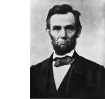
Finally, with leadership at the highest level comes--if one remains straight--an overwhelming sense of responsibility. It is that sense that transforms the faces of presidents in vigorous middle age to craggy, wrinkled old age--look at pictures of Abraham Lincoln in 1860 and 1865 for proof. The debilities of leadership--high blood pressure, heart ailments, not to mention insomnia and sheer fatigue--grow in proportion to the size of a real task. The Bible is remarkably candid in its depiction of this price. When Moses leads the Israelites through the desert, he at one point cries out in despair,
Wherefore hast thou afflicted thy servant? And wherefore have I not found favour in thy sight, that thou layest the burden of all this people upon me? Have I conceived all this people? Have I begotten them, that thou shouldest say unto me, Carry them in thy bosom, as a nursing father beareth the sucking child, unto the land which thou swarest unto their fathers? ... I am not able to bear all this people alone, because it is too heavy for me. And if thou deal thus with me, kill me, I pray thee, out of hand, if I have found favour in thy sight; and let me not see my wretchedness.
Nor is Moses the only great political leader who has thought of death as an escape and not a mere curse. Small wonder, then, that Marcus Aurelius expounded Stoicism, the retreat to what he termed the "inner citadel" as a source of calm. The wise leader designs that citadel carefully, maintains it well and visits it frequently.
The political philosopher Judith Shklar once said that one becomes a political scientist out of one of two motivations: fascination with power or fear of its consequences. A refugee from the horrors of mid-20th, century Europe, she was the latter. To those of us at a school in the capital city of the greatest power on the planet, in a country and at a time that prizes movement over stillness, enterprise over contentment, celebrity over humility, her words may come as a useful caution. They are worth pondering at this institution, at this place and time. Still, a profound awareness of the pitfalls of leadership and the price it may exact from us does not diminish its inevitability. It is indispensable to the great tasks of civilized social life. But it is more than a set of skills to be noted in a curriculum vitae.
In this respect, the SAIS education is perhaps more appropriate than one might think to that stated aim of developing leaders in international affairs. Unlike law or business schools, or schools of public policy or public administration, SAIS offers a liberal education in international affairs. It is a catholic education in languages, economics, history and international politics. It is liberal in its method, which focuses, and should focus, less on the immediate and the technical, than on the broader questions of why and how.
A liberal education is a good preparation for leadership in several ways. By broadening us, by widening our views, by opening us to different ways of viewing the world and deepening the questions that we ask, it prepares us to teach ourselves. Training prepares individuals for their next task, education for the mission of perpetual betterment.
Cardinal Newman, the great mid- 19th-century expositor of the ideal of a liberal education, declared that it teaches the student
...to see things as they are, to go right to the point, to disentangle a skein of thought, to detect what is sophistical and to discard what is irrelevant. It prepares him to fill any post with credit, and to master any subject with facility It shows him how to accommodate himself to others, how to throw himself into their state of mind, how to bring before them his own, how to influence them, how to come to an understanding with them, how to bear with them.
Leadership in free societies requires these last qualities above all: A Napoleon could make his way in revolutionary France, but (thank goodness) in a modern, free and law-abiding society, he would be a bore and, hence, a thwarted megalomaniac.
Most importantly, a liberal education deals with ends no less than with means. When students come inquiring about getting a Ph.D., saying that they "want to make policy," I have invariably said, "Tell me first what policy you would like to make." The answer is not always a good one, which is why I almost invariably suggest that they get a master's degree first and that we discuss a doctorate later.
SAIS students will, one hopes, ask not just how the International Criminal Court functions, but also what its aims are and to what extent they are achievable; learn not only how countries negotiate environmental treaties, but how to evaluate their costs and benefits; and explore not simply the mechanics of American foreign policymaking, but also meditate on the question of American purpose in the world.
It is well to study at a school that forces one to inquire into objectives and that--while not ignoring the question of technique--puts first-order questions where they belong: first.
©2002 The Paul Nitze School of Advanced International Studies of The Johns Hopkins University.